 Aquarium Fish Guide
Build a tank / Fish / Blue hippo tang
Blue hippo tang
Paracanthurus hepatus
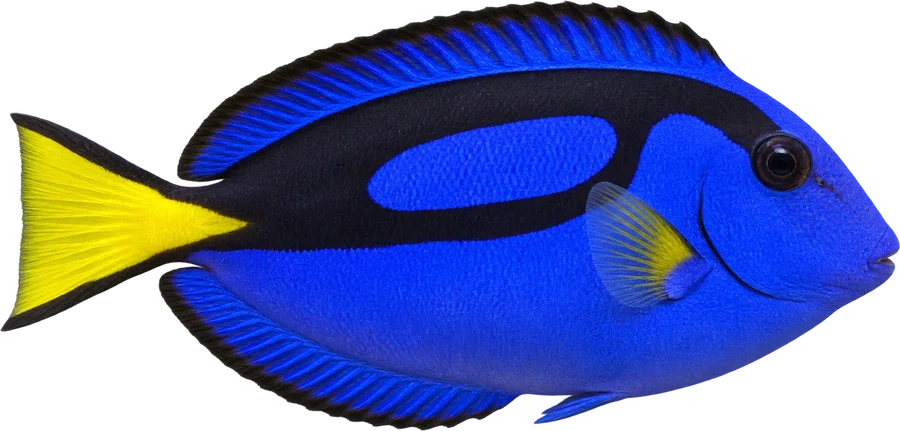
The blue hippo tang, also sold as the regal tang or Pacific blue tang, is a royal blue surgeonfish with a black pattern on its side and a yellow tail. It is the fish people know as Dory, and it is usually sold as a one or two inch juvenile. It grows to about a foot long and needs a very large tank, so it is a poor impulse buy.
- Grows to
- 12 in
- Smallest tank
- 180 gallons
- Temperature
- 72 to 78°F
- Water
- Saltwater
- Swims
- The middle of the tank
- Buy together
- One is fine
- Lives
- 10 to 20 years
- With tank mates
- Chases and nips
Is it right for you?
For experienced keepers. It needs a tank about six feet long, catches marine ich easily and is best quarantined before it goes into the display.
It is one of the milder tangs and is more skittish than aggressive, often wedging itself into rockwork when startled. It can turn pushy toward other tangs and similar fish, especially in a cramped tank.
What keepers say
Keepers love this fish for its color and personality, and many call it a favorite. They also argue about it more than almost any other fish, mostly over how big a tank it needs and how to live with its tendency to break out in ich.
What keepers like
- Owners describe it as a striking, active fish with a lot of character.
- It grows fast when fed well, with reports of fish going from about an inch to over six inches in two years.
- Many keepers find it less ich-prone than the most delicate tangs, such as the Achilles and powder blue.
Good to know first
- Ich spots commonly appear after any stress, such as a new tank mate or a missed water change, even in fish that looked clean for months.
- Very small juveniles are said to have a high death rate, and larger ones quickly outgrow a four foot tank.
- Some individuals become bullies or start nipping corals such as zoanthids and small-polyp stony corals as they grow, particularly when cramped.
- An adult is very hard to catch and remove from a tank full of rock.
Tips keepers repeat
- Do not buy one unless you have, or have a firm plan for, a tank at least six feet long.
- Quarantine the fish before adding it, because a fish with no spots can still carry ich.
- Feed heavily with seaweed and vitamin-enriched food and keep stress low to help the fish resist parasites.
- Add it after the more peaceful fish and make it the only tang unless the tank is very large.
Summarised from keeper discussion on reef2reef.com, forums.reefcentral.com. Links are at the foot of the page.
What it needs
| Tank | 180 gallons or more. One per tank. |
|---|---|
| Water | 72 to 78°F, pH 8.1 to 8.4. Saltwater. Needs a heater in most homes. |
| Food | It needs dried seaweed (nori) on a clip several times a week plus algae-based pellets or flakes, along with meaty foods such as mysis and enriched brine shrimp. A varied, vitamin-rich diet helps prevent the skin and fin erosion this species is prone to. |
| Lifespan | 10 to 20 years with good care, so it is a long commitment. |
| Comes from | It lives on coral reefs across the Indo-Pacific, from East Africa to Indonesia, the Philippines, Japan and the Great Barrier Reef. |
One blue hippo tang is fine on its own. Of the standard tank sizes, the 180, 240 gallon tanks are big enough. Fish are counted at the size they grow to: a 12 inch adult takes far more room than the young fish in the store.
Who it can live with
Often kept with
- Clownfish
- Gobies and blennies
- Cardinalfish
- Dwarf angelfish
- Reef-safe wrasses
Best kept apart from
- Other tangs, unless the tank is very large and they are added together
- Triggerfish, which may bully it
- Large angelfish, which may bully it
- Dottybacks, which can harass a small juvenile
Against the other fish on this site
- Chases and nips: yellow tang.
- Gets nipped by: yellow tang.
- No clash on size or temperature: ocellaris clownfish, royal gramma, firefish goby, banggai cardinalfish, coral beauty angelfish, six line wrasse, green mandarin goby, yellow watchman goby, yellowtail damselfish, green chromis.
That list is worked out from adult size and temperature alone. Individual fish vary, and a tank that is too small makes peaceful fish fight.
Where new owners go wrong
- Buying a tiny juvenile for a small tank without planning for a fish that reaches a foot long.
- Skipping quarantine and bringing ich into the display tank.
- Feeding only meaty foods and no seaweed.
- Moving it with a net, where the sharp spine at the base of its tail can snag.
At the store
What to look for, and ask, before one goes in the bag.
- Avoid the smallest fish in the tank and choose one that is plump, alert and at least a couple of inches long.
- Look closely for white spots, cloudy patches, frayed fins or pitting around the head and along the side.
- Ask to see it eat, ideally seaweed as well as frozen food.
- Ask whether the store has quarantined or treated the fish, and still plan to quarantine it at home.
What to buy for it
The smallest standard tank that suits it is the 180 gallon (72 x 24 x 25 inches), which weighs about 2019 lb when full. It needs a heater in most homes. No real tank this large is listed here yet. Heaters and filters are not linked to products yet.
For the floor of the tank, sand and gravel shows how many pounds a 180 gallon takes. Stands compares every stand.
See it before you buy it
Put one blue hippo tang in a tank that is big enough, add the fish you were thinking of keeping with it, and watch what the tank says about stocking, temperature and who gets along.
Sources
Checked on 23 November 2026. Minimum tank advice ranges from 100 gallons to 180 gallons or more, and keepers disagree just as much. The 180 gallon figure is used here because adults reach about a foot and swim constantly.
- LiveAquaria species spotlight: The Blue Tang care reference
- Saltwater Aquarium Blog: Blue hippo tang care guide care reference
- Wikipedia: Paracanthurus care reference
- Reef2Reef thread on adding a blue hippo tang to a 120 gallon tank keeper discussion
- Reef Central thread: hippo tang experiences keeper discussion
Care figures here come from the references listed and can still be wrong or out of date. Individual fish and tanks vary. Check with the store and a second care reference before you buy. Terms.