 Aquarium Fish Guide
Build a tank / Fish / Yellow tang
Yellow tang
Zebrasoma flavescens
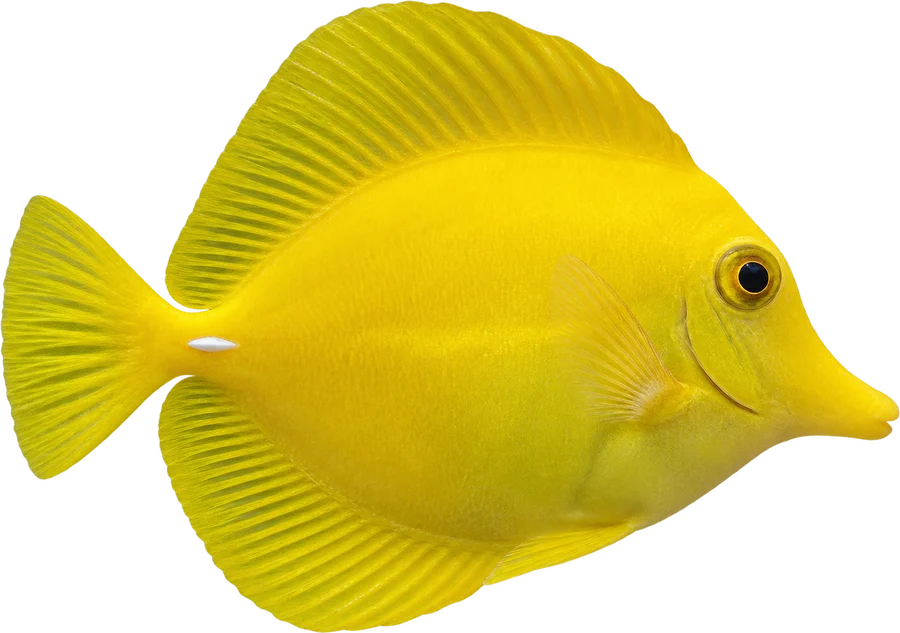
The yellow tang is a solid lemon-yellow, disc-shaped surgeonfish with a pointed snout and a small white spine at the base of its tail. It is one of the most recognizable saltwater fish, it is always on the move, and it grazes algae all day. Captive-bred fish are now sold alongside wild ones.
- Grows to
- 8 in
- Smallest tank
- 100 gallons
- Temperature
- 72 to 78°F
- Water
- Saltwater
- Swims
- The middle of the tank
- Buy together
- One is fine
- Lives
- 8 to 10 years
- With tank mates
- Chases and nips
Is it right for you?
Better with some experience. The fish itself is hardy, but it needs a large tank, a seaweed-based diet and care with tank mates, and it is prone to marine ich.
It is semi-aggressive. It ignores most small fish but defends the tank against other tangs and fish of a similar shape, slapping at them with its tail spine.
What keepers say
Keepers see the yellow tang as a hardy, long-lived classic, but one that is feistier than its reputation suggests. Most of the discussion is about tank length and about managing its temper when new fish are added.
What keepers like
- Owners like that it is always out in the open and uses the whole length of the tank.
- It is considered tough and long-lived once settled.
- It grazes on algae all day, which helps keep the rockwork clean.
- It usually ignores small fish such as clowns, gobies and blennies.
Good to know first
- Many keepers say people underestimate how aggressive it becomes, especially once it reaches four to five inches.
- It often attacks tangs, butterflyfish and angelfish that are added after it, sometimes causing fin damage within minutes.
- Juveniles grow quickly and outgrow smaller tanks.
Tips keepers repeat
- Add the tang last, after the other fish have settled.
- Treat tank length as more important than gallons, with five to six feet commonly advised for an adult.
- If it bullies a newcomer, keepers suggest a mirror on the glass, rearranging rocks, or moving the tang to a sump or holding box for a few days.
- Keep it well fed with seaweed, since some owners find that feeding calms it down.
Summarised from keeper discussion on reef2reef.com. Links are at the foot of the page.
What it needs
| Tank | 100 gallons or more. One per tank. |
|---|---|
| Water | 72 to 78°F, pH 8.1 to 8.4. Saltwater. Needs a heater in most homes. |
| Food | It is mainly a plant eater and needs dried seaweed (nori) on a clip at least three times a week, and many keepers offer it daily, plus spirulina flakes or algae pellets. It will also eat mysis and other meaty foods, which should be the smaller part of its diet. |
| Lifespan | 8 to 10 years with good care, so it is a long commitment. |
| Comes from | It lives on shallow reefs in the Pacific, mostly around Hawaii, and west to the Mariana, Marshall and Ryukyu islands. |
One yellow tang is fine on its own. Of the standard tank sizes, the 125, 180, 240 gallon tanks are big enough. Fish are counted at the size they grow to: a 8 inch adult takes far more room than the young fish in the store.
Who it can live with
Often kept with
- Clownfish
- Royal gramma
- Gobies and blennies
- Flame or coral beauty angelfish
- Reef-safe wrasses
Best kept apart from
- Other tangs, which it fights unless the tank is very large and they are added together
- Butterflyfish and other flat-bodied fish added after it, which it tends to chase
- Eels and other large predators
- Timid fish such as firefish in a small tank, which it can keep in hiding
Against the other fish on this site
- Chases and nips: blue hippo tang.
- Gets nipped by: blue hippo tang.
- No clash on size or temperature: ocellaris clownfish, royal gramma, firefish goby, banggai cardinalfish, coral beauty angelfish, six line wrasse, green mandarin goby, yellow watchman goby, yellowtail damselfish, green chromis.
That list is worked out from adult size and temperature alone. Individual fish vary, and a tank that is too small makes peaceful fish fight.
Where new owners go wrong
- Putting a small juvenile in a tank it will outgrow, without a plan to upgrade or rehome it.
- Adding it early and then trying to add other tangs or similar-shaped fish later.
- Feeding mostly meaty foods and too little seaweed.
- Skipping quarantine with a fish that readily carries ich.
At the store
What to look for, and ask, before one goes in the bag.
- Ask whether the fish is captive bred, which usually means it already eats prepared foods.
- Choose a fish with a full body and smooth, even yellow color, and avoid one with a pinched belly, white spots or pitting along the head and side.
- Ask to see it eat seaweed or pellets.
- Ask the store to bag it from a container instead of a net, because the tail spine catches in mesh.
What to buy for it
The smallest standard tank that suits it is the 125 gallon (72 x 18 x 21 inches), which weighs about 1430 lb when full. It needs a heater in most homes. No real tank this large is listed here yet. Heaters and filters are not linked to products yet.
Paid links: the stand names below link to Amazon and earn the site a commission.
| Stand that fits a 125 gallon | Top | Rated load | Price, 23 Nov 2026 |
|---|---|---|---|
| VOWNER 125 to 150 gallon stand with cabinet | 72.9 x 18.9 in | 2200 lb | $223.99 |
For the floor of the tank, sand and gravel shows how many pounds a 125 gallon takes. Stands compares every stand.
See it before you buy it
Put one yellow tang in a tank that is big enough, add the fish you were thinking of keeping with it, and watch what the tank says about stocking, temperature and who gets along.
Sources
Checked on 23 November 2026. Minimum tank sizes range from 75 gallons in some references to 90 or 100 gallons in others, and many keepers argue that a tank five to six feet long matters more than the gallon figure. The 100 gallon figure is used here.
- LiveAquaria: Yellow Tang, Hawaii care reference
- Saltwater Aquarium Blog: Yellow tang care guide care reference
- Wikipedia: Yellow tang care reference
- Reef2Reef thread on yellow tang minimum tank size keeper discussion
- Reef2Reef thread on yellow tang aggression to new tank mates keeper discussion
Care figures here come from the references listed and can still be wrong or out of date. Individual fish and tanks vary. Check with the store and a second care reference before you buy. Terms.