 Aquarium Fish Guide
Build a tank / Fish / Ocellaris clownfish
Ocellaris clownfish
Amphiprion ocellaris
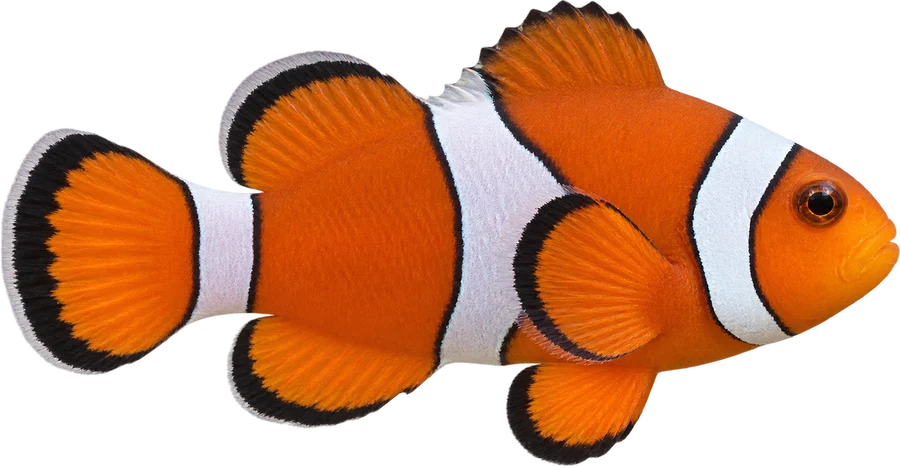
The ocellaris clownfish is the orange fish with three white bands that most people know as Nemo. It is small, hardy, almost always sold captive bred, and it eats prepared food from day one, which is why it is the usual first fish for a saltwater tank. Black, snowflake and other color forms are the same species.
- Grows to
- 4 in
- Smallest tank
- 20 gallons
- Temperature
- 72 to 78°F
- Water
- Saltwater
- Swims
- The middle of the tank
- Buy together
- One is fine
- Lives
- 6 to 15 years
- With tank mates
- Peaceful
Is it right for you?
Good for a first tank. Captive-bred fish are hardy, eat prepared foods readily and do not need an anemone.
It is peaceful toward most other fish but guards the spot it picks as home, and the larger fish of a pair, the female, is the bossier one. It does not get along with other clownfish species.
What keepers say
Keepers treat the ocellaris as the standard first saltwater fish and most are happy with it. The trouble they report is almost always about pairing: a large female can reject, bully and sometimes kill a new partner.
What keepers like
- Keepers like that captive-bred fish settle quickly and eat almost anything offered.
- A pair is considered much more entertaining to watch than a single fish.
- Owners enjoy the way clowns adopt a home, which can be an anemone, a soft coral or simply a corner of the tank.
- The different color forms can be mixed in a pair because they are all the same species.
Good to know first
- A dominant female sometimes refuses a new mate and harasses it until it hides, stops eating or dies.
- Two young fish that looked like a pair at the store can fall out months later as they mature.
- An established pair can become territorial and push other fish away from its part of the tank.
Tips keepers repeat
- Buy two fish of clearly different sizes so the larger one becomes the female without a long fight.
- Expect some chasing and twitching in the first days and step in only if one fish is being kept from eating or has torn fins.
- Use an acclimation box when adding a new clown to a tank with a settled female.
- Let the tank finish cycling and mature before adding an anemone, since the fish do fine without one.
Summarised from keeper discussion on reef2reef.com. Links are at the foot of the page.
What it needs
| Tank | 20 gallons or more. One fish or a pair. |
|---|---|
| Water | 72 to 78°F, pH 8.1 to 8.4. Saltwater. Needs a heater in most homes. |
| Food | It is an omnivore and an eager eater that takes pellets, flakes and frozen foods such as mysis shrimp. Small meals once or twice a day with some variety keep it in good condition. |
| Lifespan | 6 to 15 years with good care, so it is a long commitment. |
| Comes from | It comes from coral reefs and sheltered lagoons of the eastern Indian Ocean and western Pacific, where it lives among the tentacles of large sea anemones. |
One ocellaris clownfish is fine on its own. Of the standard tank sizes, the 20, 29, 40, 55 and larger gallon tanks are big enough. Fish are counted at the size they grow to: a 4 inch adult takes far more room than the young fish in the store.
Who it can live with
Often kept with
- Royal gramma
- Firefish goby
- Banggai cardinalfish
- Yellow watchman goby
- Small blennies
- Yellow tang in a large tank
Best kept apart from
- Other clownfish species such as maroon or tomato clowns, which fight with it
- Aggressive damselfish, which bully it
- Lionfish, groupers and other predators big enough to swallow it
- A third ocellaris added to an established pair, which the pair usually attacks
Against the other fish on this site
- No clash on size or temperature: blue hippo tang, yellow tang, royal gramma, firefish goby, banggai cardinalfish, coral beauty angelfish, six line wrasse, green mandarin goby, yellow watchman goby, yellowtail damselfish, green chromis.
That list is worked out from adult size and temperature alone. Individual fish vary, and a tank that is too small makes peaceful fish fight.
Where new owners go wrong
- Adding clownfish before the tank has finished cycling.
- Buying an anemone for a new tank because of the film, when anemones are much harder to keep than the fish.
- Mixing two clownfish species in one tank.
- Adding a similar-sized or larger newcomer to a long-established single clown, which is usually a female by then.
At the store
What to look for, and ask, before one goes in the bag.
- Ask whether the fish is captive bred, which is the hardier choice and the norm for this species.
- Pick active fish that swim upright with a waggling motion and avoid any that hover at the surface, breathe fast or look dull and slimy.
- Ask to see the fish eat before you buy.
- If you want a pair, choose one noticeably larger fish and one smaller one from the same tank.
What to buy for it
The smallest standard tank that suits it is the 20 gallon (24 x 12 x 16 inches), which weighs about 215 lb when full. It needs a heater in most homes. A real tank that is big enough: Aqueon 20 Gallon Long, 20 gallons, $99.99 on Amazon on 22 Nov 2026 (paid link). Heaters and filters are not linked to products yet.
Paid links: the stand names below link to Amazon and earn the site a commission.
| Stand that fits a 20 gallon | Top | Rated load | Price, 23 Nov 2026 |
|---|---|---|---|
| Bestier 20 to 37 gallon stand | 30.7 x 13.8 in | 400 lb | $71.39 |
| POKIPO 20 to 29 gallon stand, slide-out shelf | 31.5 x 15.8 in | 770 lb | $93.49 |
| TOCRETOARE 40 gallon metal stand | 36.5 x 18.5 in | 660 lb | $69.99 |
For the floor of the tank, sand and gravel shows how many pounds a 20 gallon takes. Stands compares every stand.
See it before you buy it
Put one ocellaris clownfish in a tank that is big enough, add the fish you were thinking of keeping with it, and watch what the tank says about stocking, temperature and who gets along.
Sources
Checked on 23 November 2026. Some guides accept a 10 gallon tank for a single fish or pair, while others say 20 gallons, and the larger figure is used here. Lifespan estimates run from about 6 to 10 years in some guides to 15 years or more in others.
- LiveAquaria: Ocellaris Clownfish care reference
- Saltwater Aquarium Blog: Ocellaris clownfish care care reference
- Wikipedia: Ocellaris clownfish care reference
- Reef2Reef thread: advice for a first pair of ocellaris clownfish keeper discussion
- Reef2Reef thread on a female clownfish rejecting new mates keeper discussion
- Reef2Reef thread on pairing a single ocellaris keeper discussion
Care figures here come from the references listed and can still be wrong or out of date. Individual fish and tanks vary. Check with the store and a second care reference before you buy. Terms.