 Aquarium Fish Guide
Build a tank / Fish / Goldfish
Goldfish
Carassius auratus
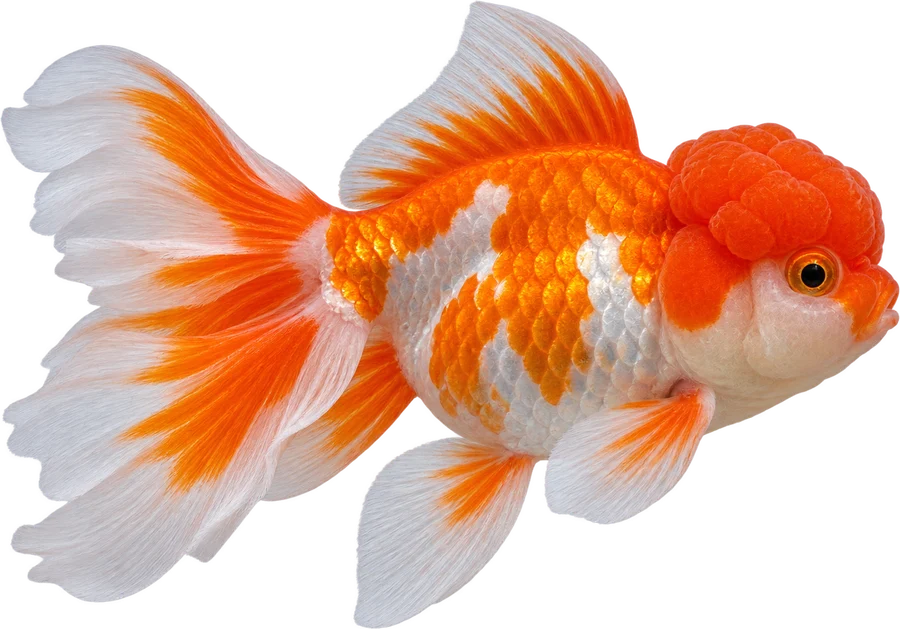
The goldfish is a domesticated carp, Carassius auratus, first bred for its gold color in China more than a thousand years ago; it was long thought to come from the Prussian (gibel) carp, though genetic studies point to wild Carassius auratus of southern China. All goldfish are one species, but breeding has split them into two very different groups: slim, fast single-tailed fish such as the common and comet, and round, slow, twin-tailed fancy goldfish such as the oranda and ryukin. Both grow far bigger and live far longer than most people expect from a fish sold for a few dollars.
- Adult size
- 6 to 8 in fancy, about 12 in comet
- Tank size
- 29 gal fancy, 75 gal comet
- Temperature
- 65 to 75°F
- Lifespan
- 10 to 20 years
- pH
- 6.5 to 7.5
- Group size
- Two or more of one kind
- Water
- Fresh water, cool
- Two kinds
- Single-tailed and fancy
Single-tailed or fancy goldfish?
Single-tailed goldfish (the common, comet and shubunkin) keep the long, streamlined shape of their wild relatives, swim fast and grow to about a foot long. Fancy goldfish (the fantail, oranda, ryukin, black moor, ranchu, pearlscale and the bubble eye and celestial types) have short, egg-shaped bodies, doubled tails and sometimes head growths or unusual eyes, which make them slow and clumsy swimmers. The difference matters most at feeding time: single-tails reach the food first, and fancy goldfish kept with them can slowly go hungry or even starve, so the two groups should live in separate tanks. Single-tails also handle colder water and are the ones that do well in outdoor ponds, while fancy types are at risk in water below about 50 degrees Fahrenheit. They need different tanks too: one fancy goldfish can live in a 29 to 30 gallon tank, but one comet needs about 75 gallons.
Single-tailed goldfish
 Comet goldfishGrows to 12 in, 75 gallons or more for the first one
 Common goldfishGrows to 12 in, 75 gallons or more for the first one
 Shubunkin goldfishGrows to 12 in, 75 gallons or more for the first one
Fancy goldfish
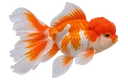 Fancy goldfishGrows to 8 in, 29 gallons or more for the first one
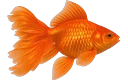 Fantail goldfishGrows to 8 in, 29 gallons or more for the first one
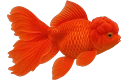 Oranda goldfishGrows to 9 in, 29 gallons or more for the first one
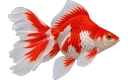 Ryukin goldfishGrows to 8 in, 29 gallons or more for the first one
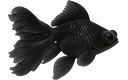 Black moor goldfishGrows to 8 in, 29 gallons or more for the first one
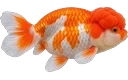 Ranchu and lionhead goldfishGrows to 7 in, 29 gallons or more for the first one
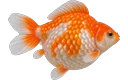 Pearlscale goldfishGrows to 6 in, 29 gallons or more for the first one
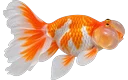 Bubble eye goldfishGrows to 5 in, 29 gallons or more for the first one
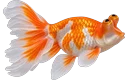 Celestial eye goldfishGrows to 5 in, 29 gallons or more for the first one
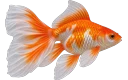 Veiltail goldfishGrows to 7 in, 29 gallons or more for the first one
Types of goldfish
| Type | Kind | Adult size | What sets it apart |
|---|---|---|---|
| Common goldfish | Single-tailed | About 6 to 14 inches, larger in ponds | The plain, sturdy original form with a short single tail, found in red, orange, gold, white, black and yellow. It is the hardiest variety and a natural pond fish. |
| Comet | Single-tailed | Up to about 12 inches | A slimmer common goldfish with a long, deeply forked tail, and the most common goldfish in the United States. It is fast, active and best suited to ponds or very large tanks. |
| Shubunkin | Single-tailed | Similar to a comet | A hardy Japanese single-tailed goldfish with a calico pattern and pearly (nacreous) scales. It lives well alongside comets and commons and in ponds. |
| Fantail | Fancy | About 6 to 8 inches | The western form of the ryukin, with an egg-shaped body, a high back fin and a long split tail but no shoulder hump. It is one of the toughest fancy types and is often suggested as a first fancy goldfish. |
| Oranda | Fancy | Usually 6 to 8 inches; some references say up to 12 | A fancy goldfish with a raspberry-like hood called a wen, which can take up to two years to develop. The folds of the wen trap dirt, so it needs very clean water. |
| Ryukin | Fancy | Up to about 10 inches | A short, deep-bodied fancy goldfish with a distinct hump behind the head, and one of the larger fancy types. Its shape makes it a slow swimmer that does best in a tank with some height. |
| Black moor (telescope) | Fancy | About 6 to 8 inches | A black telescope goldfish whose eyes bulge out to the sides. Its eyesight is poor and its eyes are easy to injure, so it needs smooth decor and slow tank mates. |
| Ranchu and lionhead | Fancy | About 5 to 8 inches | Hooded goldfish with no back fin; the lionhead came first in China and the Japanese ranchu has a shorter body and a curved back. They swim with a wiggle, are slow to reach food, and the wen can grow over the eyes. |
| Pearlscale | Fancy | Larger ones reach about the size of a baseball | A nearly round goldfish whose raised, domed scales look like small pearls. It is a weak swimmer that is prone to constipation and buoyancy trouble, so it does best on sinking food in very clean water. |
| Bubble eye | Fancy | Not stated | A goldfish with no back fin and a fluid-filled sac under each upturned eye. The sacs tear easily, so it needs a tank with no sharp decor, gentle flow and only its own kind for company. |
| Celestial eye | Fancy | Up to about 5 inches | A twin-tailed goldfish with no back fin whose eyes point straight up. It can only see food above it, so it should be kept only with other celestials. |
| Veiltail | Fancy | About 4 inches on average | A fancy goldfish with an extra-long, flowing double tail that makes it slow. Its fins are a target for fin nippers, so it needs calm tank mates. |
Goldfish care
How big do goldfish get?
Fancy goldfish usually reach about 6 to 8 inches long, and some orandas and ryukins grow to 10 inches or more. Common and comet goldfish reach about 12 inches in a large tank or pond, and big pond fish can pass 16 inches; the largest on record was about 19 inches. A small tank does not keep a goldfish small in a healthy way. It stunts the fish and shortens its life.
How long do goldfish live?
With good care most goldfish live 10 to 20 years, and the oldest on record lived past 40. Single-tailed goldfish tend to live longer than fancy ones; one reference puts commons and comets at 15 to 30 years and fancy types at 10 to 15. Goldfish kept in bowls often live only one to three years, so a short life is usually down to the container and the water, not the fish.
What size tank does a goldfish need?
For one fancy goldfish, plan on a 29 to 30 gallon tank and add about 10 gallons for each extra fish. One comet or common goldfish needs about 75 gallons, plus about 50 more for each extra fish. A long, low tank is better than a tall one of the same volume, because the larger water surface lets in more oxygen.
How many goldfish can I keep in a tank?
Goldfish are social and do best with at least one other goldfish of the same type. Using the gallons above, a 50 gallon tank holds about three fancy goldfish, while two comets need about 125 gallons. More than four single-tailed goldfish is really a job for a pond. Keep all single-tails or all fancies in one tank, not a mix.
What temperature do goldfish need, and do they need a heater?
Goldfish are coldwater fish that do well at about 65 to 75 degrees Fahrenheit, and 68 to 72 degrees is often given as ideal. Fancy types are at risk below about 50 degrees, commons and comets handle colder water, and water above about 86 degrees can harm any goldfish. In a home that is heated in winter, most goldfish need no heater. Sudden swings are the bigger danger, so keep the tank out of direct sun and match new water to the tank temperature.
Can a goldfish live in a bowl?
No. A typical bowl holds under 3 gallons, has no room for a proper filter, and lets ammonia and nitrite build up while oxygen runs low. Goldfish kept in bowls are often stunted and sick and may live only one to three years. Any container under 10 gallons is unsuitable even for a young goldfish.
What fish can live with goldfish?
The best tank mate for a goldfish is another goldfish of the same type. A few coldwater fish can work as well, such as white cloud mountain minnows (best with fancy goldfish, since big single-tails may eat them), dojo loaches, hillstream loaches and bristlenose plecos. Avoid tropical fish that need warm water, any fish small enough to swallow, fin nippers such as tiger barbs, and cichlids.
Can goldfish live in a pond?
Single-tailed goldfish such as commons, comets and shubunkins are classic pond fish and can stay outdoors all year as long as the pond does not freeze solid; where winters bring frost, aim for a pond at least 31 inches deep. Fancy types do less well outdoors in cold winters, and telescope-eyed, celestial and bubble eye goldfish should not live in ponds because their eyes are fragile. Never release a goldfish into a lake or stream, where it can breed quickly and harm native fish.
How do I take care of a goldfish day to day?
Goldfish make a lot of waste, so use a filter rated to move at least five times the tank's volume every hour, with some surface movement for oxygen. Test the water weekly and change part of it every week, anywhere from 10 to 25 percent weekly up to 30 to 50 percent whenever nitrate reaches 50 ppm. Feed goldfish pellets once or twice a day, only what is eaten in a couple of minutes, with peas, blanched greens or frozen brine shrimp as extras; fancy goldfish do better on sinking food. Rinse filter media in old tank water, never tap water, so the helpful bacteria survive.
Goldfish tank mates
Good with
- Other goldfish of the same type: single-tails with single-tails, fancies with fancies
- Dojo (weather) loaches
- Ricefish (medaka)
- Longfin rosy barbs, with single-tailed goldfish only
Keep apart from
- Tropical fish that need warm water
- Fish small enough to fit in a goldfish's mouth
- Fin nippers such as tiger barbs, especially with long-finned fancy goldfish
- African cichlids and other aggressive cichlids
- Small spiny fish such as otocinclus and cory catfish, which can lodge in a goldfish's gills
- Fast single-tailed goldfish in a tank of fancy goldfish
Sometimes kept with, with a risk
- White cloud mountain minnows, kept in a group and best with fancy goldfish: at 1.5 inches grown, small enough for an adult goldfish to eat.
- Hillstream loaches, with care, since they like more water flow than fancy goldfish: small enough for an adult comet or common goldfish to eat; safer with fancies.
- Bristlenose plecos, fed separately after lights out: wants 74 to 80°F, warmer than goldfish like.
- Zebra danios: at 2 inches grown, small enough for an adult goldfish to eat.
Goldfish are best kept with other goldfish of the same body type. Any other tank mate must be happy in cool water, too big to be swallowed and calm enough not to nip or bully slow fancy goldfish. Celestial and bubble eye goldfish should be kept only with their own kind.
What goldfish keepers say
People who keep goldfish long term see them as characterful, long-lived pets that end up far bigger than the tank they were first bought for. The recurring problems are waste and cleaning in crowded tanks, floating and sinking in round-bodied fancy types, and fast comets beating slower fancies to food. Opinions split on temperature, with some keeping goldfish in the mid to high 70s for faster growth and others preferring cooler water.
What keepers like
- Goldfish have a lot of personality, and a large black moor or lionhead can be as engaging as a big tropical fish.
- Grown goldfish are impressive, with commons and comets often reaching 12 to 16 inches.
- Hardy single-tailed types such as comets and shubunkins can winter outdoors in ponds that do not freeze solid.
- White cloud minnows in a large school look good next to bigger goldfish.
Good to know first
- Big goldfish in a tank need constant cleaning, and a 75 gallon tank with four 8 to 10 inch fish needed weekly gravel vacuuming.
- Fancy goldfish that start floating are hard to fix, and medicated foods often make no difference.
- Comets beat fancy goldfish to food and can bump into them roughly once they mature and want to spawn.
- Fish outgrow their tanks, and two feeder goldfish kept in a 75 gallon tank passed 8 inches within five years.
Tips keepers repeat
- Most of the mess comes from overfeeding and low-quality food, so cut back on food before blaming the fish.
- A bigger tank hides waste but does not remove it, so water changes still matter.
- Change temperature slowly, since warmer water raises appetite and growth and sudden shifts stress the fish.
- Large goldfish may eat white clouds, so add them in a big group and watch what happens.
Mistakes new owners make
- Buying a bowl or small starter tank because the goldfish is tiny at the store.
- Mixing fast single-tailed goldfish with slow fancy ones, so the fancies go hungry.
- Overfeeding, which fouls the water and is linked to floating and sinking problems in fancy goldfish.
- Adding tropical fish or small fish as companions, which either suffer in cool water or get eaten.
- Rinsing the filter under the tap, which kills the bacteria that break down ammonia.
- Releasing an unwanted goldfish into a pond, lake or stream, where it can spread, harm native fish and break the law in some states.
Buying goldfish at the store
- Decide whether you want single-tailed or fancy goldfish first, and do not plan to mix them in one tank.
- Pick fish with bright, clear color, upright fins and easy, alert swimming, from a tank that is not crowded.
- Pass on any fish that sinks, bobs at the surface, sits in a corner, or has lumps, wounds, clamped fins or trailing waste.
- On a bubble eye, choose a fish whose two bubbles are the same size and evenly round; on a ryukin, choose the deepest body and highest back.
- Do not mistake an oranda's head growth or a pearlscale's domed scales for disease; both are normal for those types.
See goldfish in a tank first
Put a pair of fancy goldfish or a comet in a tank of the right size and watch what the tank says about stocking, temperature and which other fish would be eaten.
Sources
Checked by Ishan on 23 November 2026. The site's species pages use 12 inches, 75 gallons, 65 to 75 degrees Fahrenheit and 10 to 20 years for the comet, and 8 inches, 29 gallons, 65 to 75 degrees Fahrenheit and 10 to 20 years for fancy goldfish; this hub follows those figures. References differ around them. Comet size is given anywhere from 4 to 12 inches, common goldfish 6 to 10 or 12 to 14 inches, and keepers report 12 to 16 inches. Fancy size is often 6 to 8 inches, but one reference gives orandas 8 to 12 inches and ryukins up to 10, and keepers put large fancies near 12 inches, so 8 inches is a middle figure. Tank advice ranges from 20 gallons per goldfish (or 20 for the first and 10 for each extra) through a 30 gallon minimum for any adult, 75 gallons for adults, and 50 to 100 gallons for larger varieties; one older reference allows only 10 gallons per fantail. Temperature ranges run from 50 to 70 degrees Fahrenheit to 72 to 76, with 68 to 72 often called optimal, and keepers and one fish vet favor the mid to high 70s. One reference gives pH 7.0 to 8.4 and another 6.0 to 8.0 instead of 6.5 to 7.5. Lifespan for fancy goldfish is given as 10 to 15 years by one reference against the site's 10 to 20, and comet lifespan as 4 to 14 or 5 to 14 years by two references. Water change advice ranges from 10 to 25 percent weekly to 30 to 50 percent when nitrate reaches 50 ppm, and feeding advice from once a day to two small meals, with one hobby writer arguing the two-minute feeding rule underfeeds slow fancies. On origin, the goldfish was long described as a domesticated Prussian (gibel) or crucian carp, but genetic work points to wild Carassius auratus of southern China, so the overview names only the species and China.
- Wikipedia: Goldfish care reference, en.wikipedia.org
- Wikipedia: List of goldfish varieties care reference, en.wikipedia.org
- FishBase: Carassius auratus summary care reference, fishbase.se
- RSPCA Australia: How should I care for my goldfish? care reference, kb.rspca.org.au
- PetMD (veterinarian written and reviewed): How to take care of goldfish care reference, petmd.com
- Science Norway: Goldfish can grow large and live very long lives, but not in small bowls (NMBU and Bergen Aquarium) care reference, sciencenorway.no
- Minnesota DNR: Goldfish as an invasive species care reference, dnr.state.mn.us
- Aquarium Co-Op: Care guide for fancy goldfish care reference, aquariumcoop.com
- Aquarium Co-Op: Goldfish tank mates care reference, aquariumcoop.com
- LiveAquaria: Fancy goldfish (oranda, black moor, ryukin, pearlscale) care reference, liveaquaria.com
- Chewy: What size goldfish tank do I need? care reference, chewy.com
- Chewy: How long do goldfish live? care reference, chewy.com
- Chewy: 12 types of goldfish care reference, chewy.com
- Aqueon: Common types of goldfish care reference, aqueon.com
- Aquarium Source: Comet goldfish care guide care reference, aquariumsource.com
- Fishkeeping World: Comet goldfish care guide care reference, fishkeepingworld.com
- Fishkeeping World: Types of goldfish care reference, fishkeepingworld.com
- Tropical Fish Hobbyist: The strange beauty of fancy goldfish varieties care reference, tfhmagazine.com
- Hobbyist goldfish variety guide (sizes and temperature by variety) care reference, csh.rit.edu
- INJAF: Fancy goldfish and swimbladder or buoyancy problems care reference, injaf.org
- The Goldfish Gazette (March 2017): Feeding fancy goldfish in mixed tanks keeper discussion
- Monster Fish Keepers thread: Do you consider goldfish coldwater only fish? keeper discussion
- Monster Fish Keepers thread: Goldfish tank mates keeper discussion
- Monster Fish Keepers thread: Mixing comets with fancy goldfish keeper discussion
- Monster Fish Keepers thread: Give fancy goldfish a chance keeper discussion
- Monster Fish Keepers thread: How big can goldfish really get? keeper discussion
- Monster Fish Keepers thread: How messy are goldfish to keep clean? keeper discussion
- AquariaCentral thread: White cloud minnows with shubunkin goldfish keeper discussion
Care figures here come from the references listed and can still be wrong or out of date. Individual fish and tanks vary. Check with the store and a second care reference before you buy. Terms.