 Aquarium Fish Guide
Build a tank / Fish / Discus
Discus
Symphysodon aequifasciatus
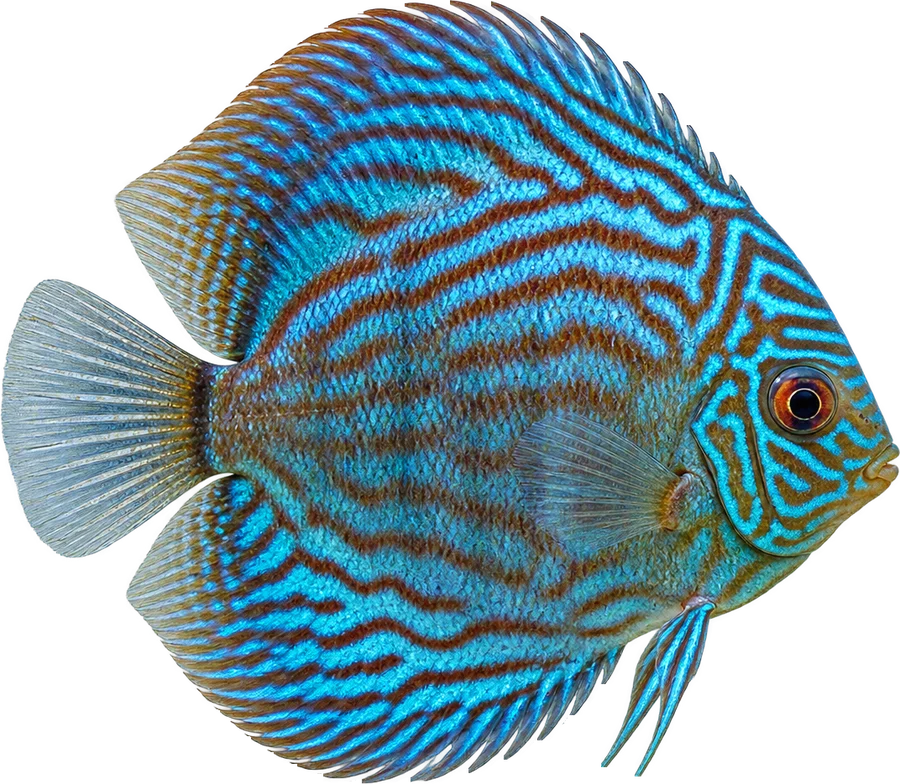
The discus is a tall, flat, plate-shaped cichlid from the Amazon that has been bred into dozens of colors, from solid blue and red to spotted and striped patterns. It is often called the king of the aquarium and is one of the most admired freshwater fish. It is also one of the most demanding, needing very warm, very clean water and the company of its own kind.
- Grows to
- 6 in
- Smallest tank
- 75 gallons
- Temperature
- 79 to 86°F
- Water
- Fresh water
- Swims
- The middle of the tank
- Buy together
- 6 or more
- Lives
- 10 to 15 years
- With tank mates
- Eats small fish
Is it right for you?
For experienced keepers. It needs a large tank, high and steady heat, soft clean water and large, frequent water changes, and young fish are especially fragile.
It is peaceful, shy and easily frightened, and it does not compete well with fast or pushy fish. Within the group there is a pecking order, and a pair that breeds moves away from the others to guard its young.
What keepers say
Keepers call discus a favorite fish and are frank that the reward comes from work. The repeated message is that clean water decides everything, that young fish are much harder than adults, and that store advice about small monthly water changes leads to losses. They disagree strongly on exactly how much water to change and how often.
What keepers like
- Keepers rank discus among their favorite fish and prize a group of full-grown adults.
- Fish over about 5 inches are described as much hardier than their reputation suggests.
- Keepers find that tank-bred discus adapt to ordinary treated tap water as long as it stays stable.
- Some keepers say their discus seem to enjoy water changes and gather around during them.
Good to know first
- A common complaint is the workload, with young fish needing large water changes every day or two.
- Keepers report that juveniles raised without enough clean water become stunted and never reach full size.
- Heavy, protein-rich feeding fouls the water quickly, which is hard to keep up with on a busy schedule.
- Keepers describe discus as sensitive to strong water flow, to other fish and to sudden changes in water chemistry.
Tips keepers repeat
- Keepers advise beginners to buy fish of 5 inches or more instead of small juveniles, even though they cost more.
- Young discus are best grown in a bare tank with no gravel or decorations, so waste is easy to see and siphon out.
- Keepers suggest about one adult discus per 10 gallons and a group of at least five or six.
- A steady pH is said to matter more than a particular number, so keepers warn against chasing pH with chemicals.
Summarised from keeper discussion on monsterfishkeepers.com. Links are at the foot of the page.
What it needs
| Tank | 75 gallons or more. A group of 5 or 6 or more. |
|---|---|
| Water | 79 to 86°F, pH 5 to 7. Fresh water. Needs a heater in most homes. |
| Food | In the wild it eats small invertebrates along with plant matter and algae. In a home tank it takes most quality foods that fit its small mouth, and young fish are fed several times a day, which makes the water dirty quickly. |
| Lifespan | 10 to 15 years with good care, so it is a long commitment. |
| Comes from | It comes from the calm floodplain lakes and slow rivers of the Amazon basin in Brazil, Colombia and Peru. |
Discus school. In ones and twos they hide and stress, so plan for six or more. Of the standard tank sizes, the 75, 125, 180, 240 gallon tanks are big enough. Fish are counted at the size they grow to: a 6 inch adult takes far more room than the young fish in the store.
Who it can live with
Often kept with
- Other discus
- Cardinal tetras
- Rummynose tetras
- Sterbai corydoras and other corydoras that tolerate warm water
- Many keepers prefer no other fish at all
Best kept apart from
- Large common plecos, because they are messy and are said to suck at the slime on discus skin
- Fast, greedy or boisterous fish, because discus are stressed by them and lose out at feeding time
- Aggressive cichlids, because discus are timid and cannot defend themselves
- Fish that need cooler water, such as goldfish and many common community fish, because discus need the tank in the 80s
- Very small tetras with adult discus, because some keepers report them being eaten
Against the other fish on this site
- Will eat: ember tetra, galaxy rasbora, pygmy cory catfish. Anything that fits in its mouth is food.
- Wants different water temperature: comet goldfish, fancy goldfish, rosy red minnow, white cloud minnow, neon tetra, zebra danio, hillstream loach, panda cory catfish, pictus catfish, mystery snail.
- No clash on size or temperature: betta (male), angelfish, red swordtail, harlequin rasbora, dwarf gourami, bala shark, clown loach, cardinal tetra, endler livebearer, bumblebee goby, glowlight tetra, black neon tetra, congo tetra, pearl gourami, honey gourami, blue gourami, german blue ram, convict cichlid, jack dempsey, firemouth cichlid, common pleco, boeseman's rainbowfish, dalmatian molly.
That list is worked out from adult size and temperature alone. Individual fish vary, and a tank that is too small makes peaceful fish fight.
Where new owners go wrong
- Buying two or three small juveniles for a planted community tank, where they often stay stunted or die.
- Following a light water change routine that suits hardier fish.
- Keeping just one or two discus, when they need a group to feel secure.
- Running the tank at normal community temperatures or with strong current, both of which stress discus.
At the store
What to look for, and ask, before one goes in the bag.
- Look for a round body and eyes that are small for the size of the fish, because large eyes on a small body are a sign of stunting.
- Avoid fish that are very dark, hiding in a corner, breathing hard or pinched thin behind the head.
- Ask to see the fish eat before buying.
- Ask what water the fish have been kept in and how often it is changed, so the home tank can be matched to it.
What to buy for it
The smallest standard tank that suits it is the 75 gallon (48 x 18 x 21 inches), which weighs about 827 lb when full. It needs a heater in most homes. No real tank this large is listed here yet. Heaters and filters are not linked to products yet.
Paid links: the stand names below link to Amazon and earn the site a commission.
| Stand that fits a 75 gallon | Top | Rated load | Price, 23 Nov 2026 |
|---|---|---|---|
| GRLEAF 55 to 75 gallon stand | 49 x 19 in | 1000 lb | $118.99 |
| HOOBRO 75 gallon stand, two drawers | 52 x 19.7 in | 1146 lb | $103.99 |
| VOWNER 125 to 150 gallon stand with cabinet | 72.9 x 18.9 in | 2200 lb | $223.99 |
For the floor of the tank, sand and gravel shows how many pounds a 75 gallon takes. Stands compares every stand.
See it before you buy it
Put 6 discus in a tank that is big enough, add the fish you were thinking of keeping with them, and watch what the tank says about stocking, temperature and who gets along.
Sources
Checked on 23 November 2026. References give the smallest tank as anything from 55 to 75 gallons, and the 75 gallon figure is used here. Adult size is usually given as about 6 inches, though aquarium fish are sometimes said to reach 8 inches. Keepers disagree widely on water changes, from large daily changes to a smaller weekly change for adults, but agree that young fish need far more than adults.
- Seriously Fish: Symphysodon aequifasciatus care reference
- Wikipedia: Discus (fish) care reference
- Monster Fish Keepers forum thread on discus water changes keeper discussion
- Monster Fish Keepers forum thread on a first time with discus keeper discussion
- Monster Fish Keepers forum thread on daily water changes keeper discussion
Care figures here come from the references listed and can still be wrong or out of date. Individual fish and tanks vary. Check with the store and a second care reference before you buy. Terms.