 Aquarium Fish Guide
Build a tank / Fish / Mystery snail
Mystery snail
Pomacea diffusa (often sold as Pomacea bridgesii)
The mystery snail is a large, round aquarium snail about 2 inches across, sold in gold, ivory and other colors. It glides around the tank eating leftover food, algae and dead leaves, and it comes to the surface to breathe air through a small tube. People like it because it is peaceful, easy to watch and leaves healthy plants alone.
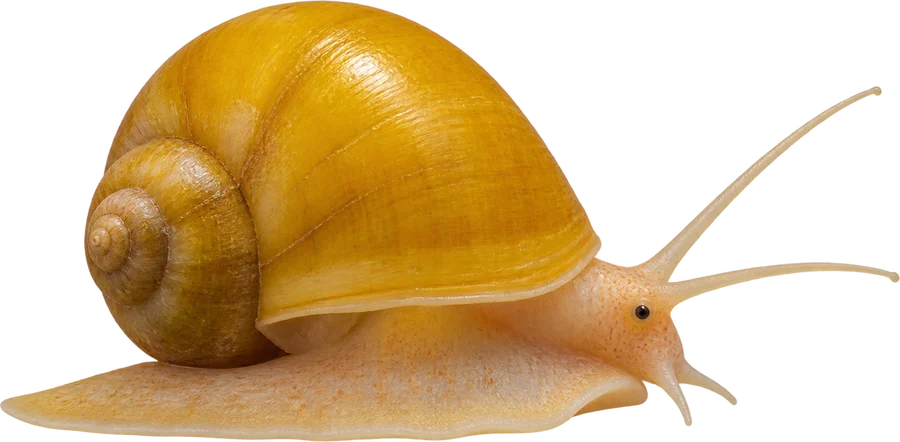
- Grows to
- 2 in
- Smallest tank
- 5 gallons
- Temperature
- 70 to 78°F
- Water
- Fresh water
- Swims
- On the bottom
- Buy together
- One is fine
- Lives
- 1 to 2 years
- With tank mates
- Peaceful
Is it right for you?
Good for a first tank. It is easy to keep as long as the water is hard and not acidic, the lid fits tightly and nothing in the tank picks at it.
It is completely peaceful and ignores fish, shrimp and healthy plants.
What keepers say
Keepers find mystery snails easy and likable, and most of what they discuss comes down to shells. Thin, pitted or whitening shells are the standard problem, and keepers trace it to soft or acidic water and too little calcium. Surprise egg clutches are the other regular topic.
What keepers like
- Keepers like their size, colors and visible personality compared with small pest snails.
- Keepers value them for cleaning up leftover food.
- Keepers find they do well with low-light plants such as anubias, java fern and cryptocorynes.
- Keepers say an active snail with a smooth shell is easy to keep that way in hard water.
Good to know first
- A common complaint is shell erosion, which keepers say does not grow back once it has happened.
- Keepers report egg clutches hatching into far more babies than they can house.
- Keepers report fish biting off the snail's antennae.
- Some keepers find that cuttlebone alone does little to fix a calcium problem.
Tips keepers repeat
- Keepers say to test pH and hardness and keep the pH at 7.0 or higher.
- Keepers recommend crushed coral in the filter or substrate to harden soft water.
- Keepers suggest calcium-rich foods such as spinach, kale and homemade gel food with added calcium.
- Keepers advise removing egg clutches from above the waterline if babies are not wanted.
Summarised from keeper discussion on aquariacentral.com, monsterfishkeepers.com. Links are at the foot of the page.
What it needs
| Tank | 5 gallons or more. Fine alone, or a few together in a larger tank. |
|---|---|
| Water | 70 to 78°F, pH 7.2 to 8. Fresh water. |
| Food | It eats leftover fish food, algae, surface film and dead plant matter, but needs its own food too. Sinking wafers, blanched spinach or kale and other calcium-rich foods keep its shell strong. |
| Lifespan | 1 to 2 years with good care, so it is a long commitment. |
| Comes from | It comes from tropical South America. |
One mystery snail is fine on its own. Of the standard tank sizes, the 5, 10, 15, 20 and larger gallon tanks are big enough. Fish are counted at the size they grow to: a 2 inch adult takes far more room than the young fish in the store.
Who it can live with
Often kept with
- Small tetras
- Corydoras catfish
- Kuhli loaches
- Dwarf shrimp
- Calm bettas
Best kept apart from
- Pufferfish, which eat snails
- Clown loaches and other snail-eating loaches
- Gouramis and other fish that nip at its long antennae
- Turtles, which eat snails
Against the other fish on this site
- Wants different water temperature: german blue ram, discus, boeseman's rainbowfish.
- No clash on size or temperature: comet goldfish, fancy goldfish, rosy red minnow, white cloud minnow, neon tetra, zebra danio, guppy, betta (male), oscar, bronze cory catfish, bristlenose pleco, black molly, sunburst platy, red swordtail, tiger barb, cherry barb, black skirt tetra, harlequin rasbora, dwarf gourami, kuhli loach, yellow lab cichlid, rainbow shark, bala shark, otocinclus catfish, clown loach, cardinal tetra, ember tetra, galaxy rasbora, endler livebearer, pygmy cory catfish, bumblebee goby, hillstream loach, glowlight tetra, rummy nose tetra, serpae tetra, black neon tetra, congo tetra, honey gourami, blue gourami, kribensis, convict cichlid, jack dempsey, firemouth cichlid, panda cory catfish, common pleco, siamese algae eater, pictus catfish, dalmatian molly, cherry shrimp.
That list is worked out from adult size and temperature alone. Individual fish vary, and a tank that is too small makes peaceful fish fight.
Where new owners go wrong
- New owners often keep them in soft, acidic water, which slowly dissolves the shell.
- New owners often assume they will live on algae and leftovers and do not feed them.
- New owners often leave the tank uncovered, although these snails climb out.
- New owners often dose the tank with copper-based medication or salt, both of which can kill snails.
At the store
What to look for, and ask, before one goes in the bag.
- Check the shell for pits, cracks or chalky white patches, which point to poor water at the source.
- Pick a snail that is attached to a surface and moving, not floating or lying closed on the bottom.
- Buy a single snail if you do not want eggs, because females can store sperm and lay fertile clutches later.
- Ask whether it is a true mystery snail and not one of the larger apple snail species.
What to buy for it
The smallest standard tank that suits it is the 5 gallon (16 x 8 x 10 inches), which weighs about 58 lb when full. It does not need a heater in a normally warm room. A real tank that is big enough: Aqueon 20 Gallon Long, 20 gallons, $99.99 on Amazon on 22 Nov 2026 (paid link). Heaters and filters are not linked to products yet.
Paid links: the stand names below link to Amazon and earn the site a commission.
| Stand that fits a 5 gallon | Top | Rated load | Price, 23 Nov 2026 |
|---|---|---|---|
| Snughome 10 to 20 gallon stand, two shelves | 24 x 11.8 in | 350 lb | $33.24 |
| MAHANCRIS 10 gallon stand with cabinet | 23.6 x 11.8 in | 450 lb | $53.99 |
| Bestier 20 to 37 gallon stand | 30.7 x 13.8 in | 400 lb | $71.39 |
For the floor of the tank, sand and gravel shows how many pounds a 5 gallon takes. Stands compares every stand.
See it before you buy it
Put one mystery snail in a tank that is big enough, add the fish you were thinking of keeping with it, and watch what the tank says about stocking, temperature and who gets along.
Sources
Checked on 23 November 2026. The scientific name is used inconsistently: the snail sold in stores is now generally called Pomacea diffusa, but it is still widely labeled Pomacea bridgesii. Keepers say a pH of at least 7.0 prevents shell erosion, while care references ask for 7.2 or higher, and the higher figure is used here.
- Aquarium Co-Op: mystery snail care guide care reference
- Wikipedia: Pomacea bridgesii care reference
- Aquaria Central thread on golden mystery snail shell problems keeper discussion
- Aquaria Central thread on snail shells deteriorating keeper discussion
- Monster Fish Keepers thread on a mystery snail shell turning white keeper discussion
- Aquaria Central thread on an injured snail and snail lifespan keeper discussion
Care figures here come from the references listed and can still be wrong or out of date. Individual fish and tanks vary. Check with the store and a second care reference before you buy. Terms.