 Aquarium Fish Guide
Build a tank / Fish / Common pleco
Common pleco
Hypostomus plecostomus (many fish sold under this name are Pterygoplichthys species)
The common pleco is a brown, spotted, armored catfish with a sucker mouth that it uses to cling to glass, rocks and wood. It is sold everywhere as a cheap 2 to 3 inch algae eater, which hides the fact that it grows to well over a foot long and lives for 10 years or more. People buy it to clean the tank, but a grown one is a large pet in its own right that needs a very big aquarium.
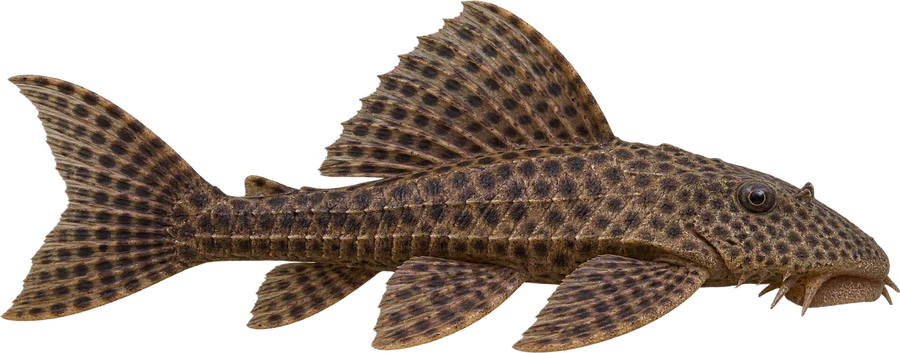
- Grows to
- 15 in
- Smallest tank
- 150 gallons
- Temperature
- 72 to 86°F
- Water
- Fresh water
- Swims
- On the bottom
- Buy together
- One is fine
- Lives
- 10 to 15 years
- With tank mates
- Peaceful
Is it right for you?
Better with some experience. It is very hardy, but its adult size and heavy waste call for a very large tank, strong filtration and big regular water changes.
It is calm with most fish and its armor protects it from bullies, but adults become territorial, especially toward other plecos. It hides during the day and is most active at night.
What keepers say
Keepers who like common plecos say they are fine, long-lived fish that almost never get the room they need. The usual story is a fish bought small for a 20 to 30 gallon tank that reaches 10 to 14 inches and then cannot be rehomed easily. Many keepers treat 125 gallons as the working minimum for an adult.
What keepers like
- Keepers describe them as tough, healthy fish with a good appetite.
- A well-kept common pleco is a long-term pet, with keepers reporting fish of 10 years and more.
- Some keepers find theirs active in the daytime and bold enough to compete for pellets.
- Keepers who have the space say they like the fish and enjoy seeing a full-grown one.
Good to know first
- A common complaint is that the fish outgrows the tank, with keepers describing 10 to 14 inch plecos stuck in 29 to 65 gallon tanks.
- Rehoming is hard, and some stores refuse to stock or take back common plecos because so many are returned.
- Adults are described as very messy, producing large amounts of waste that strain water quality.
- Keepers say a big pleco eats a lot of algae wafers, which adds to the cost.
Tips keepers repeat
- Keepers say floor space matters more than gallons, and want a tank at least 18 inches front to back so the fish can turn around.
- Weekly water changes and keeping an eye on nitrate are repeated advice because of the waste.
- Keepers suggest counting the tank mates' waste too, not only the pleco's, when judging whether a tank is big enough.
- For a small or medium tank, keepers point buyers toward a smaller pleco species instead.
Summarised from keeper discussion on monsterfishkeepers.com, aquariacentral.com. Links are at the foot of the page.
What it needs
| Tank | 150 gallons or more. One per tank, because adults are territorial with each other. |
|---|---|
| Water | 72 to 86°F, pH 6.5 to 7.5. Fresh water. Needs a heater in most homes. |
| Food | It eats both plant and animal foods, and algae alone is not enough. Sinking algae wafers or pellets, blanched vegetables such as zucchini, and some meaty food keep it fed, and a piece of driftwood gives it fiber to rasp on. |
| Lifespan | 10 to 15 years with good care, so it is a long commitment. |
| Comes from | It comes from rivers in northeastern South America, including the Guianas, northeastern Brazil and Trinidad and Tobago. |
One common pleco is fine on its own. Of the standard tank sizes, the 180, 240 gallon tanks are big enough. Fish are counted at the size they grow to: a 15 inch adult takes far more room than the young fish in the store.
Who it can live with
Often kept with
- Oscars and other large, sturdy cichlids
- Silver dollars
- Large barbs such as tinfoil barbs
- Medium to large community fish that swim in the middle and top of the tank
- Large peaceful catfish that are not plecos
Best kept apart from
- Another common pleco or other large plecos, because adults fight over territory
- Discus, because a large pleco is messy and is said to suck at their skin
- Slow, flat-sided fish such as angelfish, for the same reason
- Fancy goldfish, because the pleco adds heavy waste and may rasp at their sides
- Delicate planted tanks, because a big pleco uproots and damages plants
Against the other fish on this site
- No clash on size or temperature: comet goldfish, fancy goldfish, rosy red minnow, neon tetra, zebra danio, guppy, betta (male), angelfish, oscar, bronze cory catfish, bristlenose pleco, black molly, sunburst platy, red swordtail, tiger barb, cherry barb, black skirt tetra, harlequin rasbora, dwarf gourami, kuhli loach, yellow lab cichlid, rainbow shark, bala shark, otocinclus catfish, clown loach, cardinal tetra, ember tetra, galaxy rasbora, endler livebearer, pygmy cory catfish, bumblebee goby, hillstream loach, glowlight tetra, rummy nose tetra, serpae tetra, black neon tetra, congo tetra, pearl gourami, honey gourami, blue gourami, german blue ram, kribensis, convict cichlid, jack dempsey, firemouth cichlid, discus, panda cory catfish, siamese algae eater, boeseman's rainbowfish, pictus catfish, dalmatian molly, cherry shrimp, mystery snail.
That list is worked out from adult size and temperature alone. Individual fish vary, and a tank that is too small makes peaceful fish fight.
Where new owners go wrong
- Buying one as a cleaner for a 10 to 30 gallon tank without knowing its adult size.
- Assuming it lives on algae and waste, when it needs to be fed its own food.
- Believing it will only grow to the size of the tank, when a cramped fish is stunted and unhealthy.
- Releasing an unwanted pleco into a pond, lake or river, where these fish have become a damaging invasive species.
At the store
What to look for, and ask, before one goes in the bag.
- Ask exactly which pleco it is and how big it gets, because several large species are sold under the same name.
- Ask about smaller species such as the bristlenose pleco if the tank is under 100 gallons.
- Choose a fish with a rounded belly, not a sunken one, and with clear eyes and whole fins.
- Ask whether the store takes large plecos back, because many do not.
What to buy for it
The smallest standard tank that suits it is the 180 gallon (72 x 24 x 25 inches), which weighs about 1981 lb when full. It needs a heater in most homes. No real tank this large is listed here yet. Heaters and filters are not linked to products yet.
For the floor of the tank, sand and gravel shows how many pounds a 180 gallon takes. Stands compares every stand.
See it before you buy it
Put one common pleco in a tank that is big enough, add the fish you were thinking of keeping with it, and watch what the tank says about stocking, temperature and who gets along.
Sources
Checked on 23 November 2026. Tank size advice ranges widely. One care guide gives 75 to 80 gallons as the bare minimum and recommends at least 150 gallons, and the cautious 150 gallon figure is used here, while many keepers settle on 125 gallons. Adult size is given as about 15 inches in most aquariums and up to 20 to 24 inches in ideal conditions or in the wild.
- Wikipedia: Hypostomus plecostomus care reference
- Aquarium Source: Common pleco care care reference
- Monster Fish Keepers forum poll on minimum tank size for a common pleco keeper discussion
- AquariaCentral forum thread on tank size for a common pleco keeper discussion
- Monster Fish Keepers forum thread on rehoming three common plecos keeper discussion
- Monster Fish Keepers forum thread asking for common pleco care guidance keeper discussion
Care figures here come from the references listed and can still be wrong or out of date. Individual fish and tanks vary. Check with the store and a second care reference before you buy. Terms.