 Aquarium Fish Guide
Build a tank / Fish / Bristlenose pleco
Bristlenose pleco
Ancistrus sp. (often sold as Ancistrus cirrhosus)
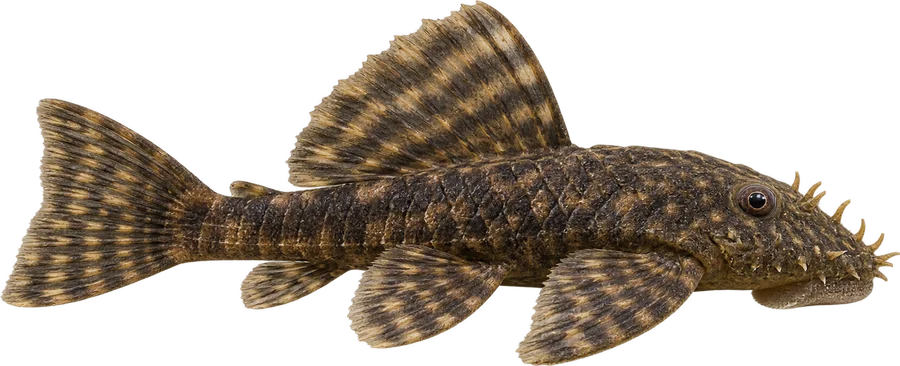
The bristlenose pleco is a small, flat-bellied sucker-mouth catfish from South America, usually brown with pale spots, with albino and long-finned forms also sold. Adult males grow a crown of fleshy bristles on the snout. People choose it because it stays around 4 to 5 inches, unlike the common pleco that reaches nearly 2 feet, and because it grazes on algae.
- Grows to
- 5 in
- Smallest tank
- 29 gallons
- Temperature
- 74 to 80°F
- Water
- Fresh water
- Swims
- On the bottom
- Buy together
- One is fine
- Lives
- 5 to 12 years
- With tank mates
- Peaceful
Is it right for you?
Good for a first tank. It is hardy once settled and stays a manageable size, as long as it is given its own food, a cave and driftwood.
It is peaceful toward other fish and hides for much of the day, coming out more at night. Males defend a cave and quarrel with other males.
What keepers say
Keepers like the bristlenose as a tough, characterful catfish that stays small, but they disagree on how good it is at clearing algae. The other strong theme is breeding: a male and female with a cave will spawn again and again, which some keepers love and others regret.
What keepers like
- Keepers describe them as very hardy once established.
- Many keepers find them good at grazing soft green algae from surfaces.
- Watching a male guard eggs and babies in his cave is described as highly rewarding.
- Keepers appreciate that it stays far smaller than a common pleco.
Good to know first
- Some keepers find their bristlenose a lazy algae eater that makes little difference.
- A common complaint is being overrun with babies, with reports of hundreds of young that are hard to sell or give away.
- Males spend most of the day hidden in a cave, so they are seldom seen.
- Keepers report bristlenoses growing larger than the usual 4 to 5 inches, with some fish reaching 6 inches or more.
Tips keepers repeat
- Keepers advise feeding algae wafers and blanched zucchini, held down with a clip, and not relying on tank algae.
- Driftwood is widely recommended because the fish rasp on it and rest on it.
- Keepers suggest giving each fish its own cave.
- Keeping a single fish, or females only, is suggested for anyone who does not want babies, and an algae scraper is still needed for the glass.
Summarised from keeper discussion on aquariacentral.com, monsterfishkeepers.com. Links are at the foot of the page.
What it needs
| Tank | 29 gallons or more. One per tank, or one male with one or more females; two males need separate caves and plenty of room. |
|---|---|
| Water | 74 to 80°F, pH 6.5 to 7.5. Fresh water. Needs a heater in most homes. |
| Food | It is mostly a plant eater that needs sinking algae wafers and blanched vegetables such as zucchini, with an occasional protein food like bloodworms. It cannot live on tank algae or leftovers alone, and it is best fed in the evening. |
| Lifespan | 5 to 12 years with good care, so it is a long commitment. |
| Comes from | It comes from streams and tributaries of the Amazon basin in South America; fish in stores are captive bred. |
One bristlenose pleco is fine on its own. Of the standard tank sizes, the 29, 40, 55, 75 and larger gallon tanks are big enough. Fish are counted at the size they grow to: a 5 inch adult takes far more room than the young fish in the store.
Who it can live with
Often kept with
- Tetras
- Guppies and platies
- Corydoras catfish
- Angelfish
- Rasboras and other peaceful community fish
Best kept apart from
- A second male bristlenose in a small tank, because males fight over caves
- Other pleco species in a small tank, because they may fight over territory
- African cichlids and other aggressive fish, because they harass it
- Fast, pushy bottom feeders, because they take its food
Against the other fish on this site
- Wants different water temperature: white cloud minnow, german blue ram, boeseman's rainbowfish.
- No clash on size or temperature: neon tetra, guppy, betta (male), angelfish, oscar, bronze cory catfish, black molly, sunburst platy, red swordtail, tiger barb, cherry barb, black skirt tetra, harlequin rasbora, dwarf gourami, kuhli loach, yellow lab cichlid, rainbow shark, bala shark, otocinclus catfish, clown loach, cardinal tetra, ember tetra, galaxy rasbora, endler livebearer, pygmy cory catfish, bumblebee goby, glowlight tetra, rummy nose tetra, serpae tetra, black neon tetra, congo tetra, pearl gourami, honey gourami, blue gourami, kribensis, convict cichlid, jack dempsey, firemouth cichlid, panda cory catfish, common pleco, siamese algae eater, pictus catfish, dalmatian molly, cherry shrimp, mystery snail.
That list is worked out from adult size and temperature alone. Individual fish vary, and a tank that is too small makes peaceful fish fight.
Where new owners go wrong
- Expecting it to live on algae and fish waste without being fed.
- Buying a baby common pleco by mistake, which grows to nearly 2 feet.
- Keeping a male and female together without a plan for the babies.
- Leaving out caves and driftwood, which leaves the fish stressed with nowhere to hide.
At the store
What to look for, and ask, before one goes in the bag.
- Confirm the label says bristlenose or Ancistrus and not just pleco, since baby common plecos look similar.
- Check that the belly is gently rounded and not sunken, which is a sign of an underfed fish.
- Ask whether the fish is male or female if you want to avoid breeding; males have bristles across the snout once they mature.
- Ask what the store feeds it and buy sinking wafers at the same time.
What to buy for it
The smallest standard tank that suits it is the 29 gallon (30 x 12 x 18 inches), which weighs about 314 lb when full. It needs a heater in most homes. A real tank that is big enough: Aqueon 29 Gallon, 29 gallons, $129.99 on Amazon on 22 Nov 2026 (paid link). Heaters and filters are not linked to products yet.
Paid links: the stand names below link to Amazon and earn the site a commission.
| Stand that fits a 29 gallon | Top | Rated load | Price, 23 Nov 2026 |
|---|---|---|---|
| Bestier 20 to 37 gallon stand | 30.7 x 13.8 in | 400 lb | $71.39 |
| POKIPO 20 to 29 gallon stand, slide-out shelf | 31.5 x 15.8 in | 770 lb | $93.49 |
| TOCRETOARE 40 gallon metal stand | 36.5 x 18.5 in | 660 lb | $69.99 |
For the floor of the tank, sand and gravel shows how many pounds a 29 gallon takes. Stands compares every stand.
See it before you buy it
Put one bristlenose pleco in a tank that is big enough, add the fish you were thinking of keeping with it, and watch what the tank says about stocking, temperature and who gets along.
Sources
Checked on 23 November 2026. References give the adult size as 3 to 5 inches or 4 to 6 inches, while some keepers report larger fish, and minimum tank advice runs from 20 to 29 gallons, so the larger figure is used here. One guide accepts water as cool as 60 degrees Fahrenheit, while another recommends a heated tank at 74 to 80.
- Aquarium Co-Op: Care guide for plecostomus care reference
- Aquarium Source: Bristlenose pleco care care reference
- AquariaCentral forum thread with opinions on bristlenose plecos keeper discussion
- AquariaCentral forum thread on bristlenose pleco size and feeding keeper discussion
- Monster Fish Keepers forum thread on bristlenose plecos keeper discussion
- Monster Fish Keepers forum write-up on good and bad beginner fish keeper discussion
Care figures here come from the references listed and can still be wrong or out of date. Individual fish and tanks vary. Check with the store and a second care reference before you buy. Terms.