 Aquarium Fish Guide
Build a tank / Fish / Rubber lip pleco
Rubber lip pleco
Chaetostoma milesi
Also known as: Rubbernose pleco, Bulldog pleco, Rubber pleco, Rubber lipped pleco, Rubberlip pleco, L146, Chaetostomus milesi
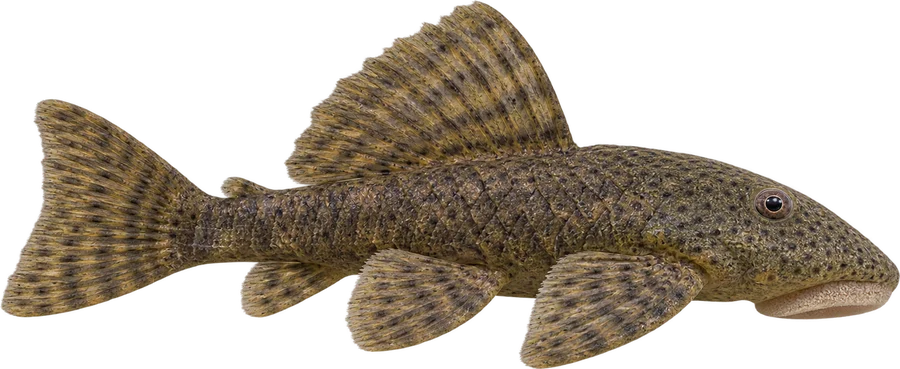
The rubber lip pleco is a stocky, grayish-brown sucker-mouth catfish from fast mountain streams in Colombia and Venezuela, named for its wide, fleshy mouth. It grazes soft algae from glass, rocks and plant leaves without eating the plants. People choose it as an algae eater that stays far smaller than the common pleco.
- Adult size
- 6 in
- Tank size
- 29 gallons or more
- Temperature
- 70 to 75°F
- Water
- Fresh water
- Swims
- On the bottom
- Group size
- One is fine
- Lifespan
- 10 to 12 years
- Temperament
- Peaceful
Is a rubber lip pleco right for you?
Better with some experience. It needs cooler, better-oxygenated water with more flow than most tropical tanks provide, and wild-caught fish often arrive thin and need careful feeding.
It is peaceful toward other fish and active in the open more than most plecos. It can be territorial toward other plecos and similar flat-bodied fish.
What keepers say
Keepers rate the rubber lip as one of the best small algae eaters, peaceful and easy to keep, and far more visible than most plecos. The main cautions are that it grows slowly, may go hungry in a busy tank, and prefers cooler water.
What keepers like
- It is a strong grazer that clears glass and soft algae well.
- It stays small enough for modest tanks.
- It is peaceful and often stays out in the open during the day.
- It is easy to find in stores and easy to maintain.
Good to know first
- It grows very slowly, so owners sometimes worry that it is stunted.
- In a crowded community tank it may not get enough to eat.
- Stores often mix several look-alike species under the same name, so the fish may not be what the label says.
Tips keepers repeat
- Supplement algae with veggie wafers, algae wafers and blanched zucchini.
- Keep it in neutral water rather than hard, alkaline water.
- Keep the tank on the cool side for a tropical fish, since it dislikes very warm water.
Summarised from keeper discussion on monsterfishkeepers.com. Links are at the foot of the page.
Rubber lip pleco tank size and water
| Tank | 29 gallons or more. One per tank is simplest; more than one needs a long tank, around 55 gallons, with rocks and wood to block their view of each other. |
|---|---|
| Water | 70 to 75°F, pH 6.5 to 7.5. Fresh water. does not need a heater at ordinary room temperature. |
| Food | It grazes algae but cannot live on what grows in the tank, so add algae wafers and blanched vegetables such as zucchini, peas and romaine. It also needs small meaty foods such as frozen bloodworms or brine shrimp now and then. |
| Lifespan | 10 to 12 years with good care, so it is a long commitment. |
| Comes from | It comes from clear, cool, fast-flowing streams with rocky beds in the Andean foothills of Colombia and Venezuela. |
One rubber lip pleco is fine on its own. Of the standard tank sizes, the 29, 40, 55, 75 and larger gallon tanks are big enough. Those sizes are for the grown fish: a 6 inch adult takes far more room than the young fish in the store.
Rubber lip pleco tank mates
Often kept with
- Neon and ember tetras
- Corydoras catfish
- Honey gouramis
- Peaceful barbs, danios and rasboras that like moving water
Best kept apart from
- Other plecos in a small tank, because it defends its patch of rock
- Aggressive fish, because they harass it
- Gars and other large predators, because they will eat it
- African cichlids kept in very hard, high pH water, because it does better near neutral
Against the other fish on this site
- Wants different water temperature: betta (male), angelfish, zebra pleco, gold nugget pleco, pearl gourami, German blue ram, discus, Boeseman's rainbowfish.
- Named under “Best kept apart from” above: royal pleco, common pleco.
No clash on size or temperature (44)
- Comet goldfish
- Fancy goldfish
- Common goldfish
- Shubunkin goldfish
- Fantail goldfish
- Oranda goldfish
- Ryukin goldfish
- Black moor goldfish
- Ranchu and lionhead goldfish
- Pearlscale goldfish
- Bubble eye goldfish
- Celestial eye goldfish
- Veiltail goldfish
- Rosy red minnow
- White cloud minnow
- Neon tetra
- Zebra danio
- Guppy
- Bronze corydoras
- Sunburst platy
- Red swordtail
- Tiger barb
- Cherry barb
- Black skirt tetra
- Harlequin rasbora
- Dwarf gourami
- Rainbow shark
- Bala shark
- Otocinclus catfish
- Cardinal tetra
- Ember tetra
- Galaxy rasbora
- Pygmy corydoras
- Bumblebee goby
- Hillstream loach
- Serpae tetra
- Black neon tetra
- Congo tetra
- Jack Dempsey
- Panda corydoras
- Pictus catfish
- Dalmatian molly
- Cherry shrimp
- Mystery snail
That list is worked out from adult size and temperature alone. Individual fish vary, and a tank that is too small makes peaceful fish fight.
Mistakes new owners make
- Relying on tank algae alone, especially in a new, clean tank with little to graze.
- Keeping it in warm, still water, when it comes from cool, fast, oxygen-rich streams.
- Assuming a small store fish is full grown, when it can keep growing for years.
- Mixing it up with the larger rubber pleco, a different fish with crisscross stripes.
Buying rubber lip plecos at the store
What to look for, and ask, before one goes in the bag.
- Look for a rounded belly, since many arrive thin after shipping and some never recover.
- Ask whether the fish is wild caught and how long the store has had it eating.
- Check that the fish has spots on the head, not crisscross stripes, to avoid a different, larger pleco.
- Plan for an air stone or strong filter outlet before you buy, so the water stays well oxygenated.
What to buy for a rubber lip pleco
By volume, the smallest standard tank that suits it is the 29 gallon (30 x 12 x 18 inches); check that its footprint and height suit a grown rubber lip pleco too. Full, it weighs about 314 lb. It does not need a heater at ordinary room temperature. A real tank that is big enough: Aqueon 29 Gallon (paid link), 29 gallons, . Heaters and filters are not linked to products yet.
Paid links: the stand names below earn the site a commission.
| Stand that fits a 29 gallon | Top | Rated load | Price |
|---|---|---|---|
| Bestier 20 to 37 gallon stand | 30.7 x 13.8 in | 400 lb | |
| POKIPO 20 to 29 gallon stand, slide-out shelf | 31.5 x 15.8 in | 770 lb | |
| TOCRETOARE 40 gallon metal stand | 36.5 x 18.5 in | 660 lb |
For the floor of the tank, sand and gravel shows how many pounds a 29 gallon takes. Stands compares every stand.
Similar fish
 Bristlenose pleco5 in, 29 gallons or more
 Clown pleco4 in, 20 gallons or more
 Zebra pleco3.5 in, 29 gallons or more
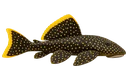 Gold nugget pleco9 in, 125 gallons or more
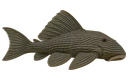 Royal pleco16 in, 125 gallons or more
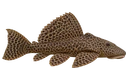 Sailfin pleco18 in, 180 gallons or more
See it before you buy it
Put one rubber lip pleco in a tank that is big enough, add the fish you were thinking of keeping with it, and watch what the tank says about stocking, temperature and who gets along.
Sources
Checked by Ishan on 24 November 2026. Fish sold as rubber lip plecos are often the closely related Chaetostoma formosae. References give the adult size anywhere from 4 to 7 inches, partly because more than one species is sold under this name, and the minimum tank from 20 to 30 gallons, so 30 gallons is used here. Temperature advice runs from 68 to 75 degrees Fahrenheit in one reference to 72 to 80 in others, so the cooler middle ground is given.
- Seriously Fish: Chaetostoma formosae (Striped Bulldog Pleco) care reference
- Aquarium Source: Rubber lip pleco care reference
- Aquariadise: Rubber lip pleco care reference
- Monster Fish Keepers forum thread with opinions on rubber lip plecos keeper discussion
- Monster Fish Keepers forum thread on rubber lip pleco growth keeper discussion
- Monster Fish Keepers forum thread on rubbernose plecos keeper discussion
- Monster Fish Keepers forum thread on the rubber lipped pleco keeper discussion
- Wikipedia: Chaetostoma milesi other names
- Wikipedia: Chaetostoma formosae other names
- Aquarium Source: Rubber lip pleco other names
- Fish Laboratory: Rubber Lip Pleco (L146) other names
Care figures here come from the references listed and can still be wrong or out of date. Individual fish and tanks vary. Check with the store and a second care reference before you buy. Terms.